Your Thumb Is the House Edge: How Casino Apps Are Designed Around Your Hand
Photo: Shixart1985, CC BY 2.0, via Wikimedia Commons
There's a superstition every gambler carries: the lucky seat, the lucky machine, the lucky hour. But ask the people who actually build casino apps what they're optimizing for, and none of them mention luck. They mention your thumb.
"The hand is the interface," a mobile UX designer who's worked on gaming apps told me, on the condition I keep her off the record. "Not the screen. The hand. Everything else is decoration."
Portrait Mode Wasn't an Accident
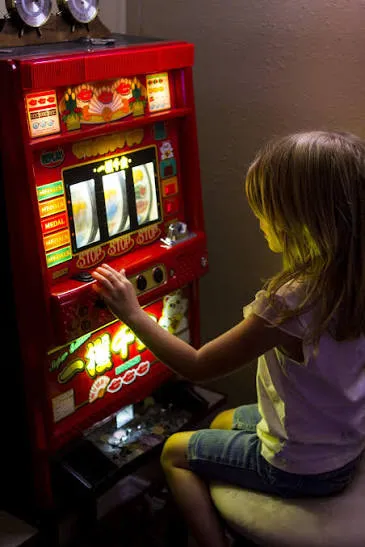
Open almost any mobile slot app — including the lobbies we cover here at Aden168 — and you'll notice something: the overwhelming majority run in portrait. That's the opposite of desktop slots, the opposite of the physical cabinets in Vegas, and the opposite of what your brain probably associates with "slot machine."
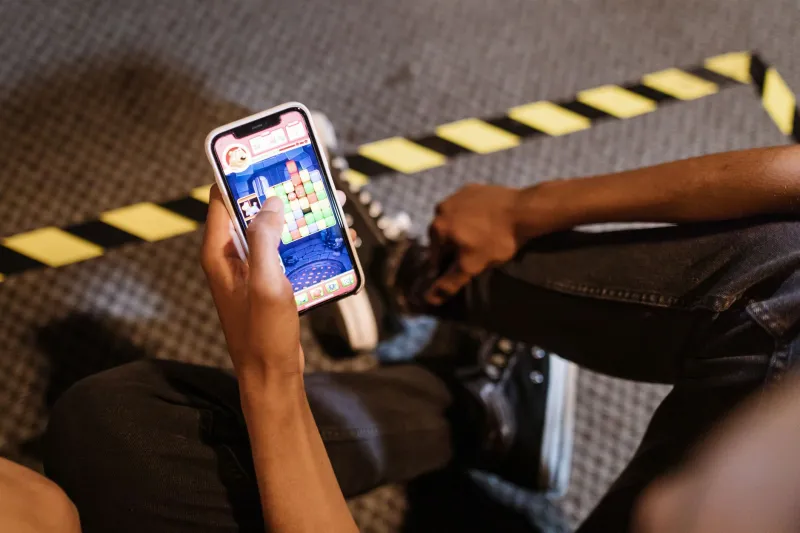
Why? Because portrait is the one-handed position. Landscape requires two hands or a phone stand. Portrait lets you spin while holding a coffee, waiting in a drive-thru, or lying on your side in bed at 1 a.m.
"One-handed play removes friction," the designer explained. "Every bit of friction — repositioning your grip, rotating the phone — is a micro-pause. Pauses are where people decide to stop."
In other words, the app isn't built around how you play. It's built around how you keep playing.
The Spin Button Lives Where Your Thumb Already Is
Grab your phone in your dominant hand and look at where your thumb naturally rests. For most right-handed people, that's the lower-right quadrant of the screen. Now open a slot app. The spin button is almost always exactly there.
This is called the "thumb zone," and it's UX design 101 — except casino apps apply it with unusual intensity. On most apps, the tap area for spin is oversized, sometimes 20-30% larger than other buttons, and the button often stays active during the reel animation, letting you queue up the next spin before the last one lands.
That last part matters more than it sounds. Rapid-fire tapping — spin, spin, spin, with no gap for thought — is one of the strongest predictors of faster bankroll depletion. Some designers call this "flow state engineering." Regulators in the UK have started calling it something less flattering, and some jurisdictions have banned features that accelerate play. US-regulated social and sweepstakes casinos face no such restrictions.
Haptics: The Buzz That Isn't Luck
Here's where it gets genuinely sneaky. Turn on haptic feedback and your phone gives you a tiny physical pulse on wins — and, on many apps, on near-misses too. Two matching symbols and a heartbreak third? Buzz.
"A near-miss with haptic feedback registers in the brain almost like a small win," the designer told me. "The player feels the event. They spin again to chase the feeling."
The practical takeaway: if you want to slow your own roll, go into your phone's settings and kill haptics for your casino apps. It's the cheapest bankroll protection available, and it costs the house nothing to let you do it — because most players never will.
The Superstition You Should Actually Keep
So does your grip position change your luck? No. The RNG doesn't care if you're holding your phone with your left hand while standing in a Costco line.
But your grip absolutely changes your pace, and pace is where the money goes. The math is brutal and simple: slots have a fixed house edge per spin, so the only variable you truly control is spins per hour. Two-handed landscape play with the phone on a table is measurably slower than one-handed thumb-tapping on the couch. Slower pace, smaller losses, longer session.
So here's the reframe: stop treating your "lucky grip" as superstition and start treating it as strategy. The next time you settle in for a session, prop the phone up, use both hands, and take your thumb out of the equation. You're not changing your odds. You're changing your speed.
And in the thumb economy, speed is the only currency that matters.