One-Six-Eight: The Number That Followed Gamblers Across the Pacific
Photo: Viktor Lazić, CC BY-SA 4.0, via Wikimedia Commons
Walk through any casino in Macau and you'll notice something odd about the elevators. Whole floors are skipped. Buildings jump from the 60th to the 68th, and the penthouse — if the property has one — almost always carries a number ending in 8. It's not architecture. It's arithmetic-as-faith.
And one number sits above all the rest: 168.
A Pun Worth Millions
The magic works because of how Mandarin sounds. In Cantonese and Mandarin, the number one is pronounced roughly "yat" or "yao," six is "luk" or "liu," and eight is "baat" or "fa." String them together and the phrase lands close to 一路發 — yat lou faat — which translates to "prosperity all the way" or "fortune the whole journey."
That's it. That's the whole superstition. A phonetic coincidence, polished by centuries of numerology into something closer to a prayer. Eight alone is auspicious because it echoes faat, the word for wealth — which is why the Beijing Olympics opened at 8:08 p.m. on 8/8/2008, and why a phone number ending in 8888 once sold at a Hong Kong auction for the equivalent of hundreds of thousands of dollars.
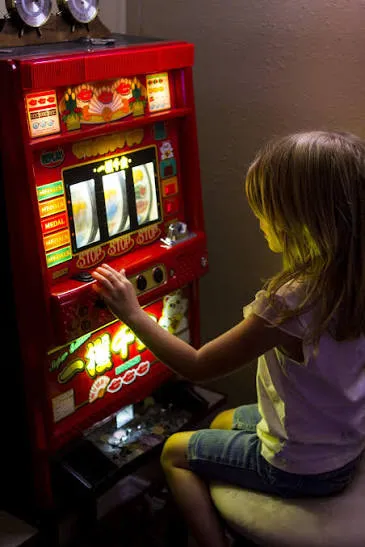
Add the one in front and you get momentum. Not just wealth, but wealth on the road, wealth that keeps moving. For gamblers, that distinction matters. Nobody sits down at a slot hoping for a single good spin.
From Macau's Floors to Your Phone Screen
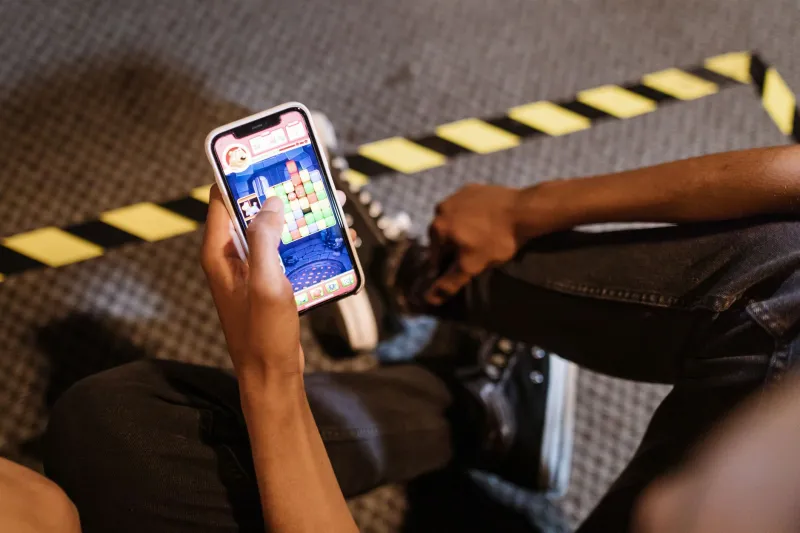
For decades, the superstition stayed put — baked into casino floor numbers, high-roller room designations, and the license plates of anyone who could afford one. Then two things happened: Macau became the world's largest gambling market, and gambling moved onto phones.
Mobile casinos, especially those courting players with ties to Chinese, Taiwanese, Hong Kong, or Southeast Asian communities, leaned hard into the number. Domains ending in 168. Slot lobbies named "Lucky 168." Bonuses sized at $16.80 or $168. It's branding as blessing — a way of signaling to a specific player, we know what you value.
What's genuinely interesting is that the signal didn't stay inside that community. The number has crossed over. You'll now find 168 plastered on US-facing casino apps, sweepstakes sites, and social casinos where the majority of players have never heard the original pun. The number has been laundered into a generic symbol of luck, the way four-leaf clovers and horseshoes are — stripped of its origin but keeping its charge.
Do Lucky Numbers Actually Change Behavior?
Here's where it gets fun from an editorial standpoint, because the research says: kind of, yes.
A body of behavioral research going back decades shows that people who feel lucky take more risks. In one well-known series of experiments, psychologist Ellen Langer and colleagues found that people were willing to bet more on a lottery ticket when they'd chosen the numbers themselves — the illusion of control at work. Other studies have found gamblers bet more confidently when a superstition is in play, even one they claim not to believe in.
For slot players, the practical effect shows up in game selection. Given two mechanically identical games, a player drawn to 168 branding will pick the 168 game — and feel better while playing it. Feeling better means playing longer. Playing longer is, of course, exactly what the casino wants.
That's not a conspiracy. It's marketing meeting psychology at the exact intersection where both make money. A lucky number doesn't change the RNG, doesn't shift the return-to-player percentage, and doesn't bend the odds one iota. But it changes the player, and the player is the only variable in the room that actually behaves differently.
What American Players Should Take From It
None of this is a knock on the number. Superstition is a feature of gambling, not a bug — it's part of the fun, the same way a baseball player's pre-game routine is part of the game. If tapping a 168-branded slot makes your session more enjoyable, enjoy it.
Just keep two things clear in your head:
The number is decoration, not math. Every licensed slot's outcome is determined by a random number generator audited for fairness. The 8s on the logo have zero relationship to the 8s on your reels.
Luck branding is a targeting tool. When a casino leans on lucky numbers, red-and-gold color schemes, or fortune-themed promos, it's telling you who it thinks it's talking to. That's useful information — not about the games, but about how the operator markets. Read the terms on any "lucky" bonus the same way you'd read any other.
The Charm Travels
There's something kind of great about the journey this number took. A Cantonese pun about prosperity got attached to Macau's casino boom, got digitized by mobile gaming, and now shows up on the lock screen of a player in Ohio who just thinks it looks cool. Culture does that. It exports the feeling and lets the meaning reassemble itself wherever it lands.
So the next time you spot 168 in a slot lobby, you can smile at the wordplay — fortune all the way — and then do what every smart player does regardless of numerology: check the RTP, set a budget, and treat the lucky number as what it's always really been. A wish. A nice one, but a wish.
Play for fun, not for rent. That's the only strategy the number 168 can't improve.