Thumb on the Button, Luck in Your Head: 3,360 Spins Later, the Math Has Spoken
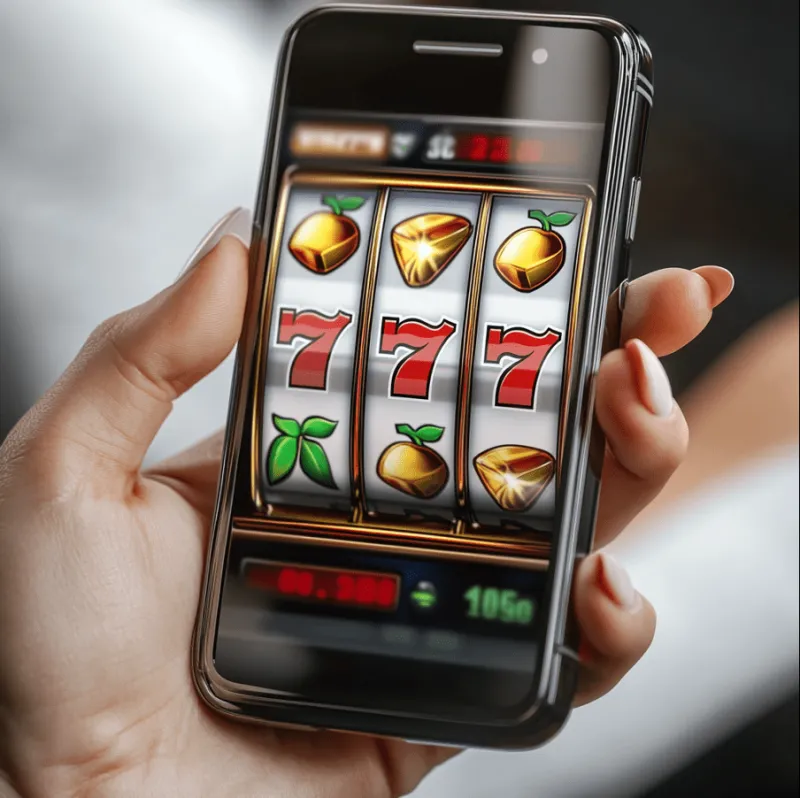
Photo: hand tapping smartphone screen casino slot game app, via casinouk.com
Every slot community has that one guy. The one who swears autoplay is a scam, that the game "knows" when you're not touching the screen, that his thumb carries some kind of magic the RNG can't replicate. We hear versions of this claim in our comments constantly, and honestly, we get the appeal. If luck lives anywhere, it feels like it should live in your own hand.
So we did what any slightly obsessive gambling site would do: we ran the numbers. Two identical sessions, six popular mobile slots, 1,680 spins each way — 3,360 total. One session played entirely by thumb. One session handed over to autoplay. Same bet settings to start, same games, same week.
Here's what happened.
The Setup: Same Games, Same Money, Different Hands
We picked six slots that show up in nearly every US-facing mobile lobby: a classic three-reel fruit game, two Megaways titles, a hold-and-win jackpot slot, a fish-themed game, and one licensed branded title. Bets started at $0.20 per spin on every game in both modes. Bankroll for each session: $100.
The manual session was played like a normal human plays — thumb on the spin button, occasional pauses, a coffee break in the middle. The autoplay session used each game's built-in auto-run feature at default speed with no stop conditions beyond running out of funds.
We tracked three things: total spins completed, any changes to bet size, and the balance at the end.
Result One: The Machine Does Not Care About Your Thumb
Let's kill the superstition first, because it deserves a quick and painless death.
The manual session finished with $61.40 left. The autoplay session finished with $57.85. Both sessions produced a couple of bonus rounds, both hit a stretch of dead spins that lasted well over forty pulls, and neither session's outcome pattern showed anything statistically unusual for medium-volatility slots at this bet level.
That's a $3.55 difference across 1,680 spins — pure variance, the kind of noise you'd expect if you ran the same experiment ten more times. The RNG doesn't know whether your thumb or a software loop triggered the spin. There's no ghost in the machine watching for idle hands. If anything, the autoplay session's slightly worse result just reflects how variance clusters; run it again next week and the numbers could easily flip.
But here's where it gets interesting — because the real difference between the two modes wasn't in the outcomes. It was in our behavior.
Result Two: Autoplay Made Us Loosen Up With the Bets
In the manual session, we changed the bet size exactly twice, both times downward after a cold streak. Total time elapsed: just over two hours, including breaks.
In the autoplay session, we changed the bet size four times — and three of those changes were upward. Why? Because when you're not physically tapping, the money stops feeling like money. Each spin becomes an abstraction scrolling past on a screen, and nudging the bet from $0.20 to $0.40 to $0.60 feels like adjusting a setting, not doubling your risk. By spin 1,100, we were wagering triple our starting amount without ever making a conscious decision to "raise the stakes."
This is the quiet mechanic nobody talks about. Autoplay removes friction, and friction is one of the last natural brakes a gambler has. Every thumb tap is a micro-moment where you can look at your balance, feel the streak, and reconsider. Autoplay deletes those moments in bulk. Ten-second auto-runs at triple your starting bet will drain a $100 bankroll faster than an hour of deliberate tapping ever could.
Result Three: Session Length Lies to You
The manual session felt long. Two hours of tapping is genuinely tiring — your thumb gets bored before your bankroll does, which is honestly a feature.
The autoplay session flew by. We looked up and 1,680 spins were gone in under 70 minutes. Same money, same games, but the clock moved completely differently. That's the trade: you give up control and fatigue in exchange for speed, and speed is always the house's friend. Fewer decision points per hour means more spins per hour, and more spins per hour means the house edge compounds faster against your balance.
So Should You Ever Use Autoplay?
We're not here to ban anything — autoplay is a legitimate feature, and on some games it's the only way to survive a long bonus hunt. But our 3,360 spins taught us three practical rules:
- Lock the bet before you lock the spins. Set your wager, then set autoplay, and don't touch the bet mid-run. The upward creep is real and it's sneaky.
- Use short auto-runs. Most games let you set 10, 25, or 50 spins. Choose the small number. Forcing yourself to re-engage every 25 spins restores the friction autoplay removes.
- Never autoplay above your base bet. If your normal thumb-spin bet is $0.20, autoplay at $0.20. Autoplay is a convenience tool, not a reason to play bigger.
And the luck question? Settled. Your thumb brings exactly as much fortune as a software loop does: none. The only thing your hand controls is the pace and the discipline — and on a mobile screen, that's actually everything that matters.
Play smart, set your limits, and may the 168 be with you — thumb or no thumb.